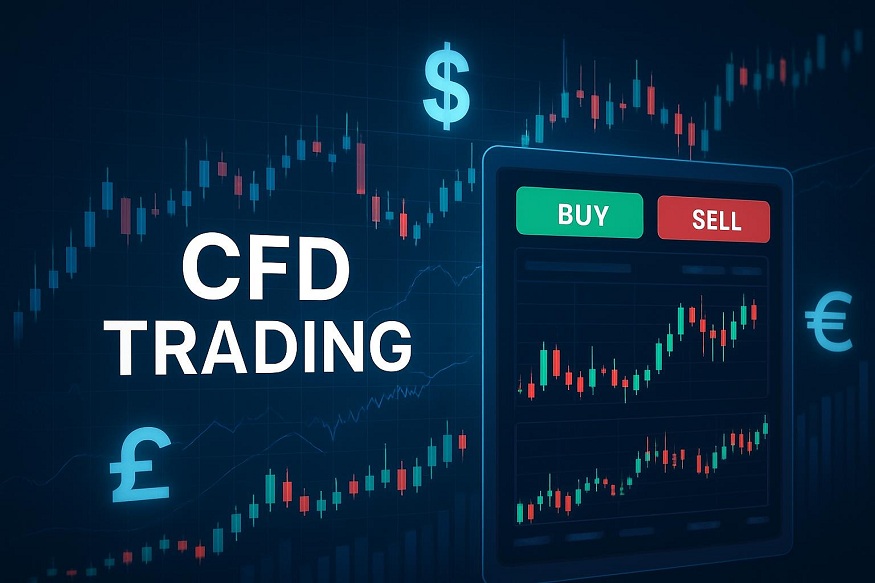

Financial markets offer a wide range of opportunities, but not every trading method appeals to investors who prefer a fast-paced and flexible approach. Active traders, in particular, look for tools that allow them to respond quickly to market movements, analyse trends efficiently, and access a variety of financial instruments without unnecessary complexity. Over the past decade, Contracts for Difference (CFDs) have become one of the preferred instruments among traders who want to remain closely connected to daily market activity.
CFD trading has grown in popularity because it combines accessibility, flexibility, and exposure to multiple markets within a single framework. Instead of focusing solely on traditional asset ownership, active traders often prioritise speed, adaptability, and the ability to react to changing conditions. CFDs support this style of trading by providing a dynamic way to participate in price movements across global markets.
Flexibility Across Multiple Financial Markets
One of the primary reasons CFDs attract active traders is the broad range of markets they make available. Through a single trading platform, investors can access price movements in equities, commodities, currencies, indices, and even cryptocurrencies. This level of variety allows traders to monitor and participate in multiple sectors without needing separate accounts or complex investment structures.
For active traders, diversification is not just about long-term risk management. It also involves identifying short-term opportunities across different asset classes. For example, while stock markets may be quiet during certain periods, currency markets or commodities may show increased volatility. CFDs allow traders to move between these markets quickly, following opportunities wherever they appear.
Read More: Material Selection in Large-Scale Construction: Why Heavy Steel Plates Matter
Another advantage is the convenience of centralised trading platforms. Instead of switching between different brokerage services, traders can manage multiple positions in one place. Many market participants rely on established trading environments such as ADSSecurities to access real-time data, trading tools, and a wide selection of financial instruments that support active market engagement.
The Ability to Trade Rising and Falling Markets
Active traders are often less concerned with whether markets are generally rising or declining. Instead, they focus on the direction of price movements and the opportunities that arise from volatility. CFDs are particularly appealing because they allow traders to speculate on both upward and downward price movements.
When traders believe the price of an asset will increase, they can open a long position. If they anticipate that prices may fall, they can open a short position. This flexibility allows traders to participate in markets regardless of broader economic conditions. Even during periods of market uncertainty or economic downturns, price movements can create opportunities for those who understand how to respond.
This ability to trade in both directions also encourages traders to pay closer attention to technical analysis and market signals. By studying patterns, support and resistance levels, and momentum indicators, active traders attempt to anticipate where prices might move next. CFDs provide the mechanism that allows them to act on these insights quickly.
Leverage and Capital Efficiency
Another factor contributing to the popularity of CFDs among active traders is leverage. Leverage allows traders to control a larger market position with a relatively smaller initial investment. This means traders can gain exposure to significant market movements without committing the full value of the underlying asset.
For many active traders, capital efficiency is a major advantage. Instead of tying up large amounts of capital in a single asset, traders can allocate their funds across multiple positions. This flexibility makes it easier to pursue different trading strategies while maintaining liquidity for future opportunities.
Read More: Things to Know Before Borrowing Money Through Digital Channels
However, leverage must be approached carefully. While it can amplify potential profits, it also increases the risk of losses. Experienced traders understand the importance of managing leverage responsibly and using risk management tools to protect their capital. Proper position sizing and strategic planning are essential when trading leveraged instruments like CFDs.
Risk Management and Strategic Discipline
While the advantages of CFD trading are appealing, successful traders understand that discipline and risk management are essential components of any trading strategy. Active traders typically develop structured plans that define entry points, exit strategies, and acceptable levels of risk before entering a position.
One common risk management technique is the use of stop-loss orders. These automated instructions close a trade when the price moves beyond a predetermined level, helping to limit potential losses. By defining risk boundaries in advance, traders can avoid emotional decision-making during periods of market volatility.
Another important strategy involves maintaining balanced exposure. Instead of placing all capital into one trade, experienced traders spread their investments across several opportunities. This diversification reduces the impact of any single market movement while allowing traders to observe multiple sectors simultaneously.
Conclusion
The popularity of CFD trading among active traders is largely driven by its flexibility, accessibility, and responsiveness to market movements. By offering exposure to multiple asset classes and allowing speculation on both rising and falling prices, CFDs provide traders with a versatile tool for engaging with global markets.
At the same time, the success of CFD trading depends on responsible decision-making, careful risk management, and a commitment to ongoing education. Traders who approach the markets with discipline and awareness are better positioned to take advantage of opportunities while managing the risks that come with active market participation.